
ENTERPRISE
ROBOCALL MITIGATION
Deploy advanced traffic intelligence, policy controls, and fraud detection workflows for cleaner, compliant voice delivery.
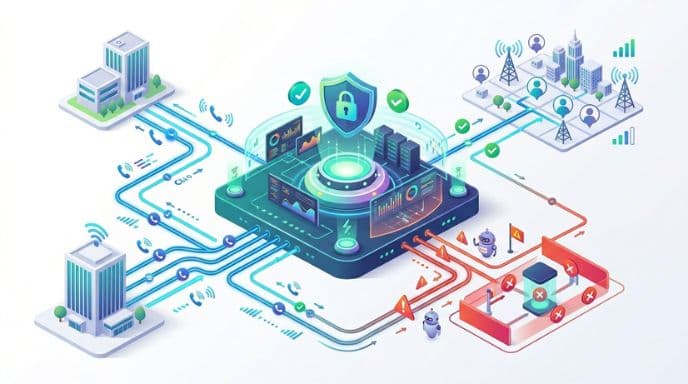
Fraud Prevention
Robocall mitigation systems help telecom operators detect, block, and report suspicious call patterns before they reach end users.
Network Reputation
Maintain network integrity and prevent fraudulent traffic abuse by enforcing advanced mitigation controls.
Subscriber Trust
Protect subscribers from scam calls and meet strict telecom regulatory requirements across global regions.
Mitigation Features
Behavioral Analytics
Machine learning algorithms flag anomalous calling patterns in real-time.
Call Blocking & Filtering
Proactively drop calls matching known fraud signatures and blocklists.
Traceback Support
Automated logging and reporting to support industry traceback requests.
Traffic Thresholds
Apply dynamic limits to CPS, Call Duration, and ASR anomalies.
Regulatory Alignment
Comply with FCC and regional mandates for robocall mitigation programs.
Custom Policies
Define per-customer or per-route mitigation policies and actions.
Why Robocall Mitigation Matters
Unwanted robocalls and fraudulent traffic have become one of the largest challenges facing global telecom networks. These calls damage consumer trust and expose carriers to regulatory penalties.
How Robocall Mitigation Works
Traffic Monitoring
All inbound and outbound calls are analyzed for behavioral anomalies.
Risk Detection
ML models detect abnormal patterns such as bursts or invalid IDs.
Policy Enforcement
Violations are automatically blocked, throttled, or flagged.
Reporting & Traceback
Detailed logs are generated to support audits and investigations.
Advanced Fraud Detection Signals
Abnormally high call attempt rates
Low answer seizure ratios (ASR)
Extremely short call durations
Invalid or spoofed caller IDs
High call failure patterns
Repeated traffic bursts
Compliance & Regulatory Support
Telecom operators must comply with strict robocall mitigation regulations. Our platform supports initiatives like FCC frameworks and STIR/SHAKEN.
Common Mitigation Use Cases
Telecom Carriers
Monitor wholesale voice traffic and prevent abusive call campaigns.
VoIP Providers
Protect outbound calling platforms from fraudulent activity.
Call Centers
Ensure outbound dialing operations comply with robocall regulations.
Enterprise Voice
Protect business communication channels from spoofing attacks.
Network Intelligence Platform
Our mitigation system operates as part of a broader telecom intelligence platform, providing real-time traffic analytics and routing controls.
PROACTIVE MANAGEMENT
These insights allow operators to proactively manage traffic risks and maintain network integrity.
STIR/SHAKEN Integration
Our mitigation platform works alongside our STIR/SHAKEN services to provide caller ID verification and identity attestation.
Simple Deployment Process
Traffic Assessment
Analyze current traffic patterns and identify risk exposure levels.
Policy Config
Define mitigation rules, thresholds, and fraud detection policies.
Activation
Enable real-time monitoring and anomaly detection across your network.
Optimization
Refine policies based on ongoing intelligence and traffic trends.
Robocall Mitigation FAQ
What is robocall mitigation?
Robocall mitigation refers to technologies used to detect, prevent, and report fraudulent automated calling activity before it reaches end users.
How does it protect networks?
By analyzing traffic patterns and blocking suspicious call activity based on behavioral anomalies and fraud signatures.
Is it required by regulators?
Yes. Many regions (like the US with the FCC) require providers to implement formal robocall mitigation programs.
Does it work with STIR/SHAKEN?
Yes. It complements STIR/SHAKEN by detecting suspicious patterns even if the caller identity is authenticated.